
नेपाल 2/5: Kathmandu

Continuing from the last post ..
Upon entering Kathmandu Durbar Square, you'll discover numerous locations to purchase entry tickets.
Kathmandu Durbar Square
Kathmandu Durbar Square, also known as Basantapur Durbar or Hanuman Dhoka, is an ancient landmark situated in the heart of Kathmandu's old city. Renowned for its intricate wood carvings and deep historical roots, Basantapur captivates first-time visitors. Hanuman Dhoka, originally constructed during the Licchavi period (4th to 8th centuries AD), was significantly expanded in the 17th century by King Pratap Malla. With the highest concentration of historic structures in the area, the square is home to numerous palaces, courtyards, and temples, earning it the nickname "Museum of Temples" due to its collection of over 50 temples.
Among these is the temple of the titular deity, Taleju Bhawani. The Durbar is divided into two courtyards: the outer courtyard, which includes Kasthamandap, Kumari Ghar, and the Shiva-Parvati Temple, and the inner courtyard, which houses Hanuman Dhoka and the main palace. Several floors of the palace have been converted into museums dedicated to three generations of Shah kings of Nepal. Most parts of the palace complex are open to tourists throughout the week, and handicraft shops around Gaddi Baithak offer an array of unique items for purchase. Few temples that I remember clearly as
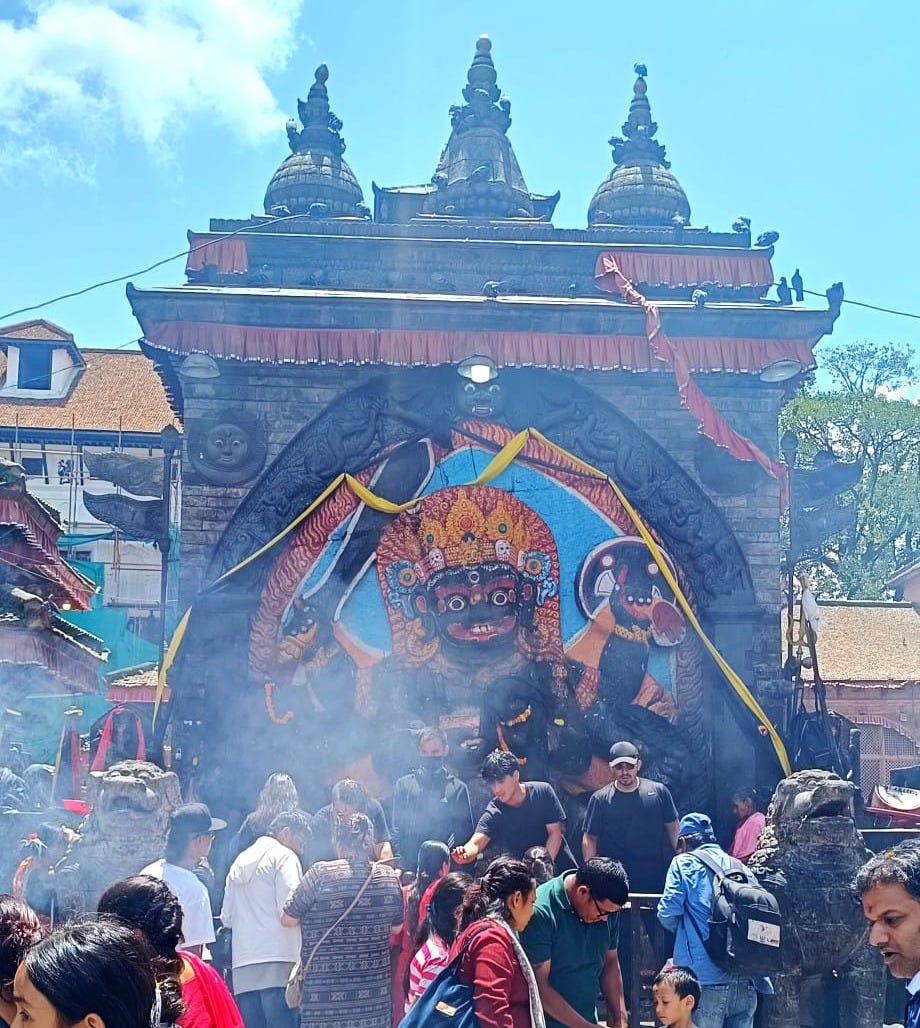
a) The Kal Bhairav is one of Kathmandu's largest stone statues from the 17th century, depicting the fearsome form of Lord Shiva.
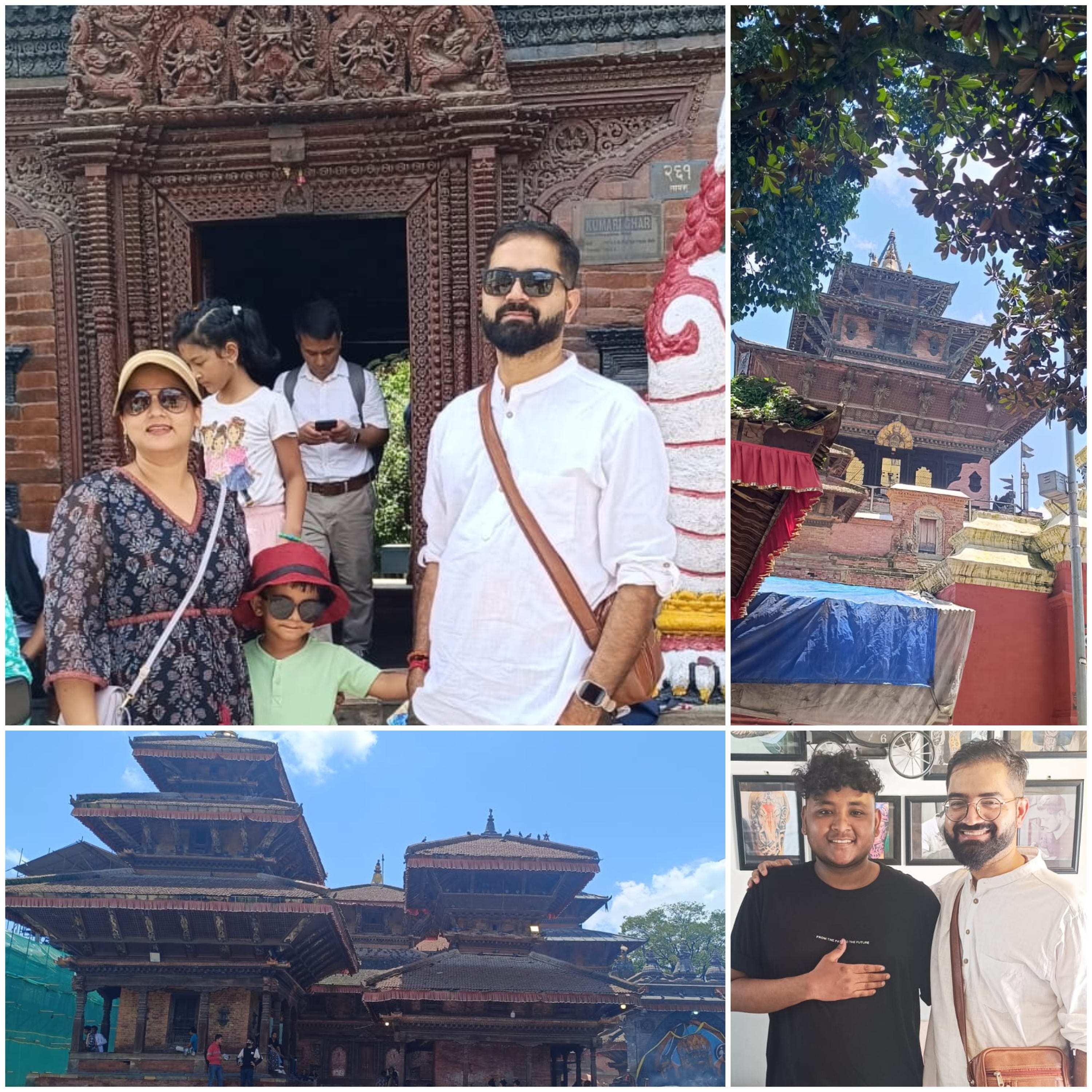
b) Kumari Temple: The 17th-century Kumari Temple, also known as the Temple of the Living Goddess, showcases exquisite Nepali craftsmanship. It serves as the official residence of the Living Goddess, Kumari of Kathmandu. Visitors can catch a glimpse of the goddess and receive blessings during designated hours.
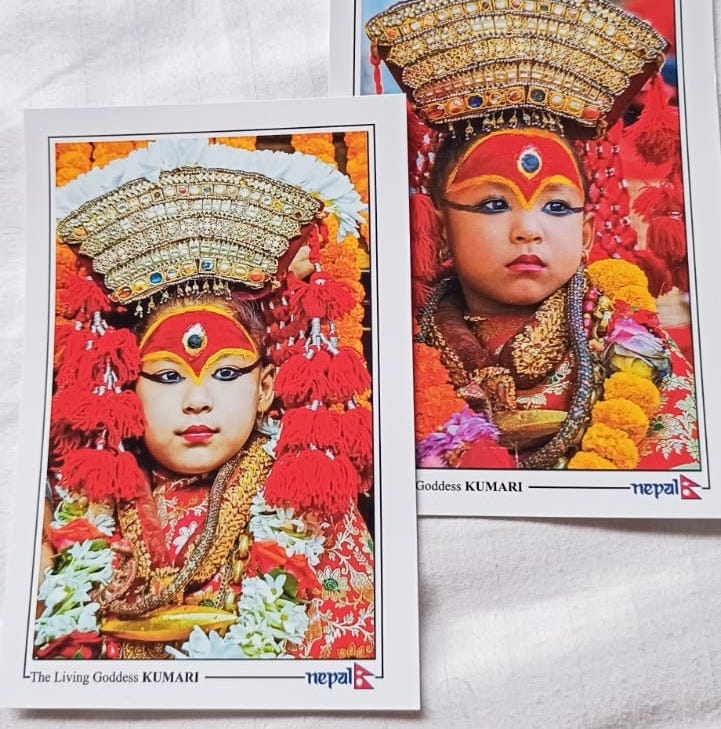
The Kumari, a young girl from the Shakya clan, is selected through a complex ceremony and is considered sacred until menstruation. Leading a secretive life, she makes three public appearances each year, where she is carried through the streets in a chariot. Revered by both Hindus and Buddhists, the Kumari is believed to possess 32 perfections. Isolated from normal life, she is not allowed to smile and spends limited time seated on a throne. After her time as the Kumari, she returns to a normal life.
c) Jagannath Temple - Constructed in the 16th century, the Jagannath Temple is renowned for its intricate carvings of erotic figures on its wooden struts.
I have a fond memory of getting my ears pierced at Umesh Tattoo—the cheerful artist did it in just a minute. The market near Durbar Square also offers a great selection of souvenirs and paintings.
Patan Durbar Square
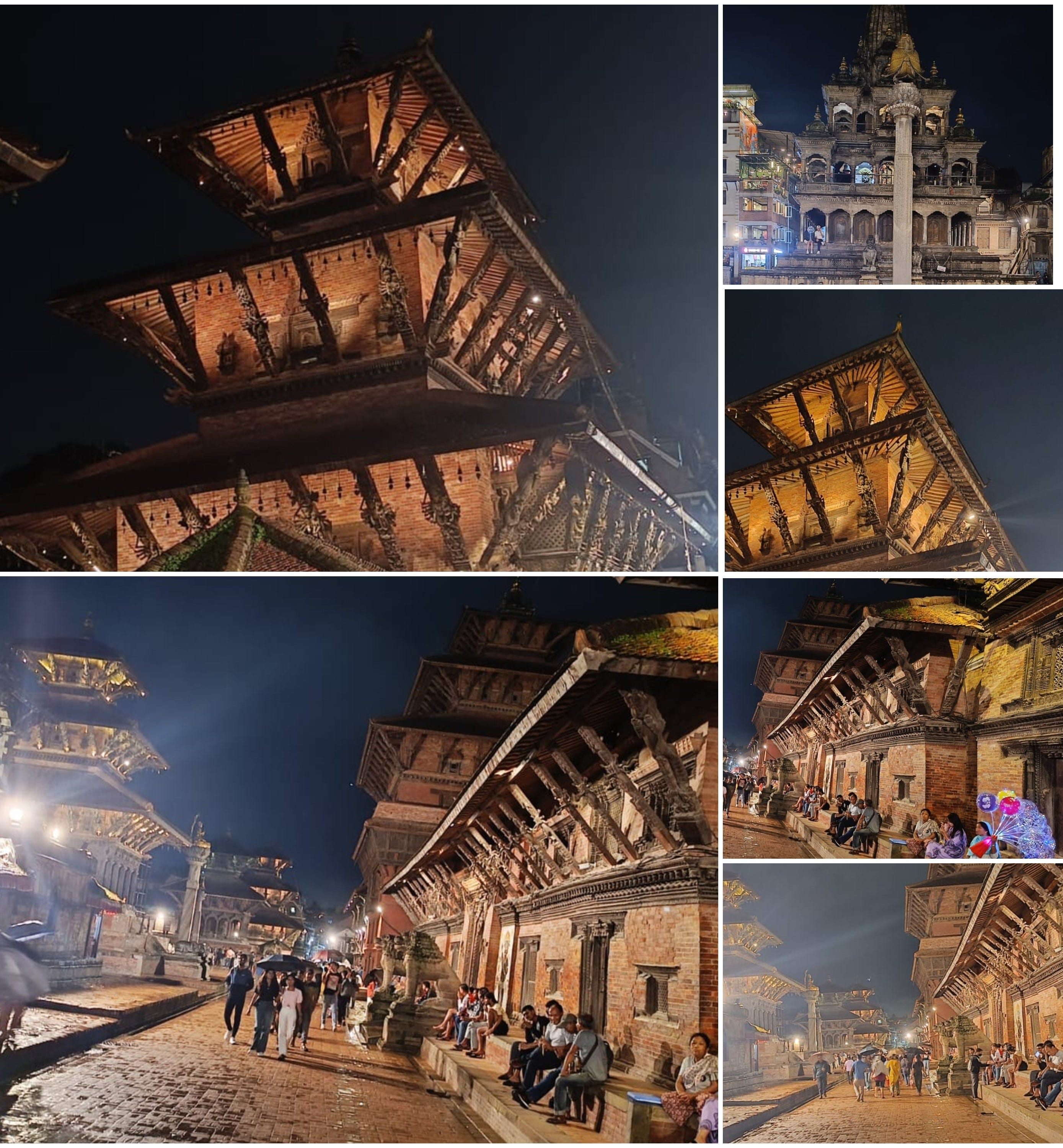
Patan Durbar Square, located in the heart of Lalitpur district, is a treasure trove of fine art and architecture, showcasing intricate carvings and inscriptions on wood and metal, crafted by our ancestors. The city is renowned for its temples, shrines, statues, monuments, festivals, and rich culture, all of which reflect the exceptional craftsmanship of earlier generations. Even today, as you wander through the narrow alleys of Patan, you can hear the tapping of hammers as artisans continue to create beautiful ornaments and idols. Lalitpur, the second largest town in the Kathmandu Valley, is separated from Kathmandu by the Bagmati River and is about 5 km away. Depending on traffic, you can reach Patan from Thamel in roughly 30 minutes.
Patan's boundary is marked by ancient Buddhist stupas, believed to have been built in 250 BC by King Asoka during his visit to the valley. These four stupas, located at Gwarko (East), Pulchowk (West), Kumbeshwor (North), and Lagankhel (South), symbolize the four corners of Patan. It is said that after King Asoka built these stupas, Buddhism flourished in the valley. While three of the stupas are simple mounds of earth with prayer wheels, the northern one at Kumbeshwor is a striking concrete structure.
Patan is considered the oldest of the three cities in the Kathmandu Valley. Like Kathmandu Durbar Square and Bhaktapur Durbar Square, Patan Durbar Square is a UNESCO World Heritage site. Lalitpur, which means "City of Beauty" in Sanskrit, is believed to have been founded in 299 AD by King Veer Deva. The city has had many ancient names, including Yala and Manigal, each with its own stories.
One popular legend involves the Red Machhindranath. According to the tale, the valley once faced a severe drought. Representatives from the three kingdoms of the valley, including Lalit, a farmer from Patan, journeyed to Assam, India, to bring back the deity Red Machhindranath, who was believed to have the power to bring rain. Lalit carried the god all the way back to Patan, and soon after, the valley was relieved from the drought. In honour of Lalit, the city was named Lalitpur—Lalit, the farmer, and "pur," meaning township.
Bhaktapur Durbar Square
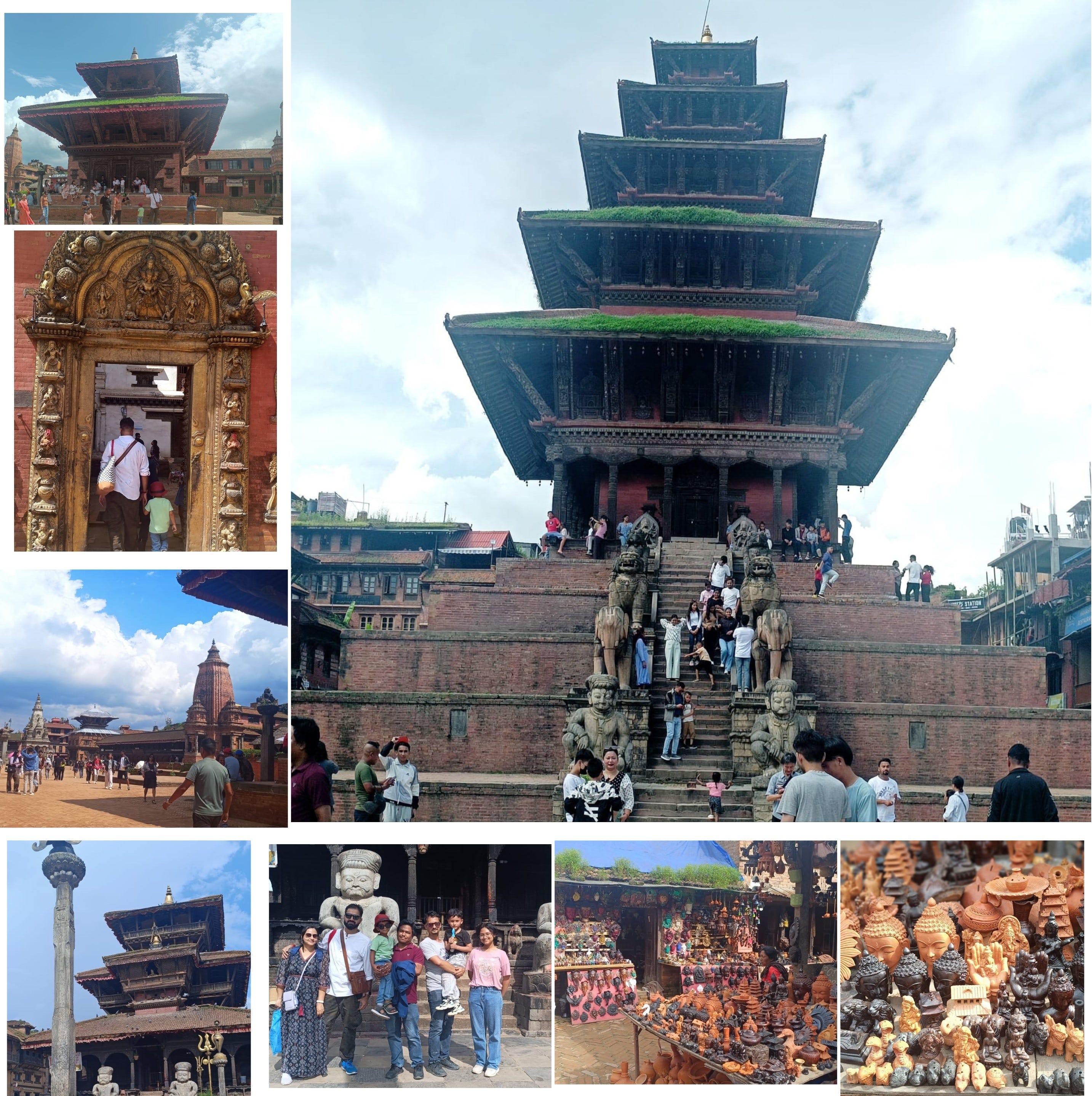
Bhaktapur Durbar Square is undoubtedly one of the top attractions in Bhaktapur, drawing countless visitors. It’s often the main reason travellers choose to explore this area. Despite Bhaktapur municipality covering just 6.889 square kilometres, it boasts numerous temples and stunning monuments. Within this small town lies the even smaller Bhaktapur Durbar Square, a space that showcases the richness of Newari art, architecture, and history. The location is quite distant from the Thamel district, and since we needed to head to Nagarkot right after, we decided to stop by during midday.
Major attractions include the 55-Window Palace, built in 1427 AD and later embellished by King Bhupatindra Malla; the 17th-century Vatsala Temple; the iconic Nyatapola Temple, the tallest in the Kathmandu Valley; and Dattatreya Temple, built in 1427 AD and dedicated to the hybrid deity Dattatreya. Other notable landmarks are the Lion Gate, Golden Gate, Bhairav Nath Temple, and Pujari Math, home to the famous Peacock Window. The square is filled with historical and religious sites that reflect the rich Newari culture. This location is renowned for its tantric studies, and you'll spot locks in various areas throughout the premises. When we inquired about entering, we were advised not to touch those gates, as they are reserved for tantric and only accessible to a few of them. I had the pleasure of reconnecting with my friend Sarat (holding my son), who was incredibly supportive during my MS studies in Germany. Not only was he a fantastic cook, but he was also my classmate. It was truly wonderful to see him again.
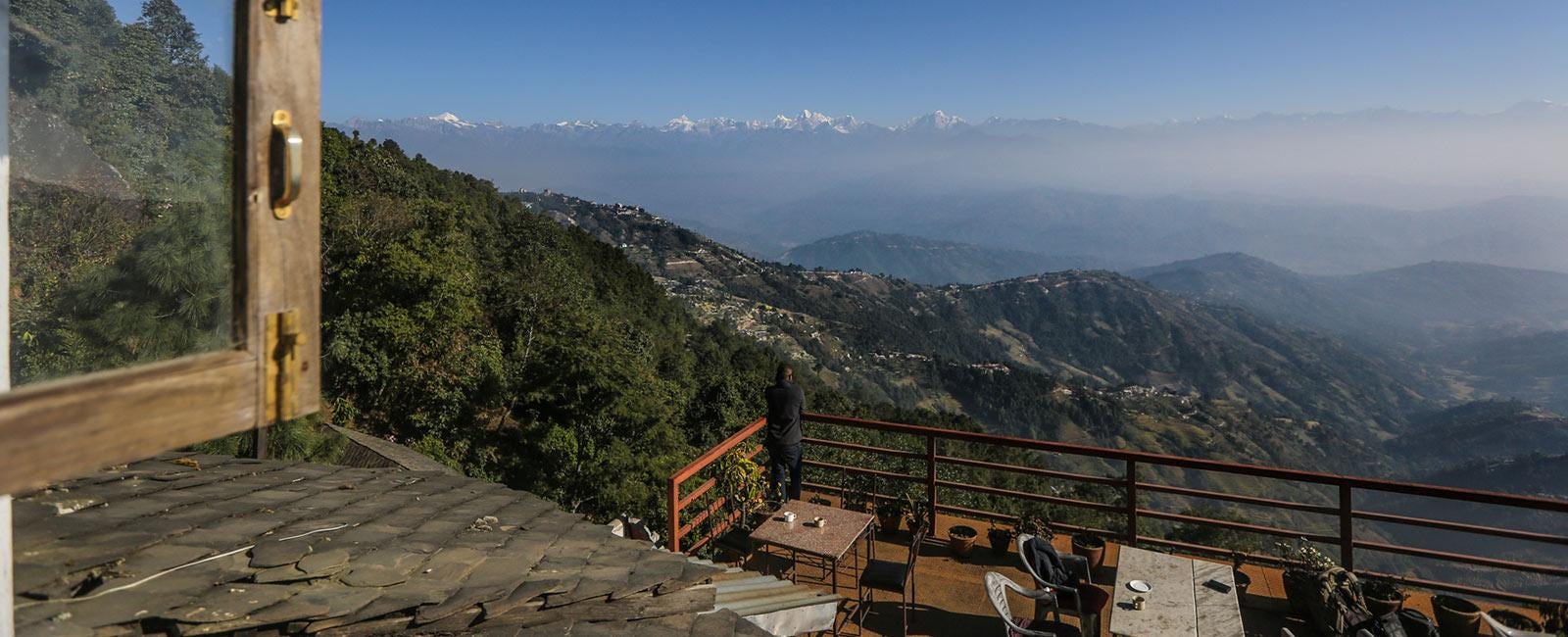
As evening fell, the rain began to pour, but after some discussions, we managed to book a cab to Nagarkot. We had a reservation at the Everest Manla resort, where we anticipated breathtaking views of both the sunset and sunrise. If you're eager to discover the town, consider spending a day in Nagarkot. Many visitors simply stop by for a photo (sunrise/sunset), but staying longer allows you to truly connect with nature. During our visit, the rain at night created a soothing symphony from the forest that felt incredibly restorative.
Local Food, Cafes & Shopping
Kathmandu offers a rich culinary experience with iconic dishes such as momos, dal bhat (Thakali best I had fin Gokarana Thamel), Newari cuisine, chatamari, and sel roti. The city's café culture is thriving, with popular spots like Himalayan Java, The Yala Café, Yellow House Café, Café Soma, and Roadhouse Café. Shopping in Kathmandu is a delight for those seeking unique items, with key areas including Thamel for trekking gear and souvenirs, Asan Bazaar for local products, and Patan and Bhaktapur for traditional handicrafts and pottery. The Boudha Stupa area is also great for Tibetan handicrafts and meditation items.
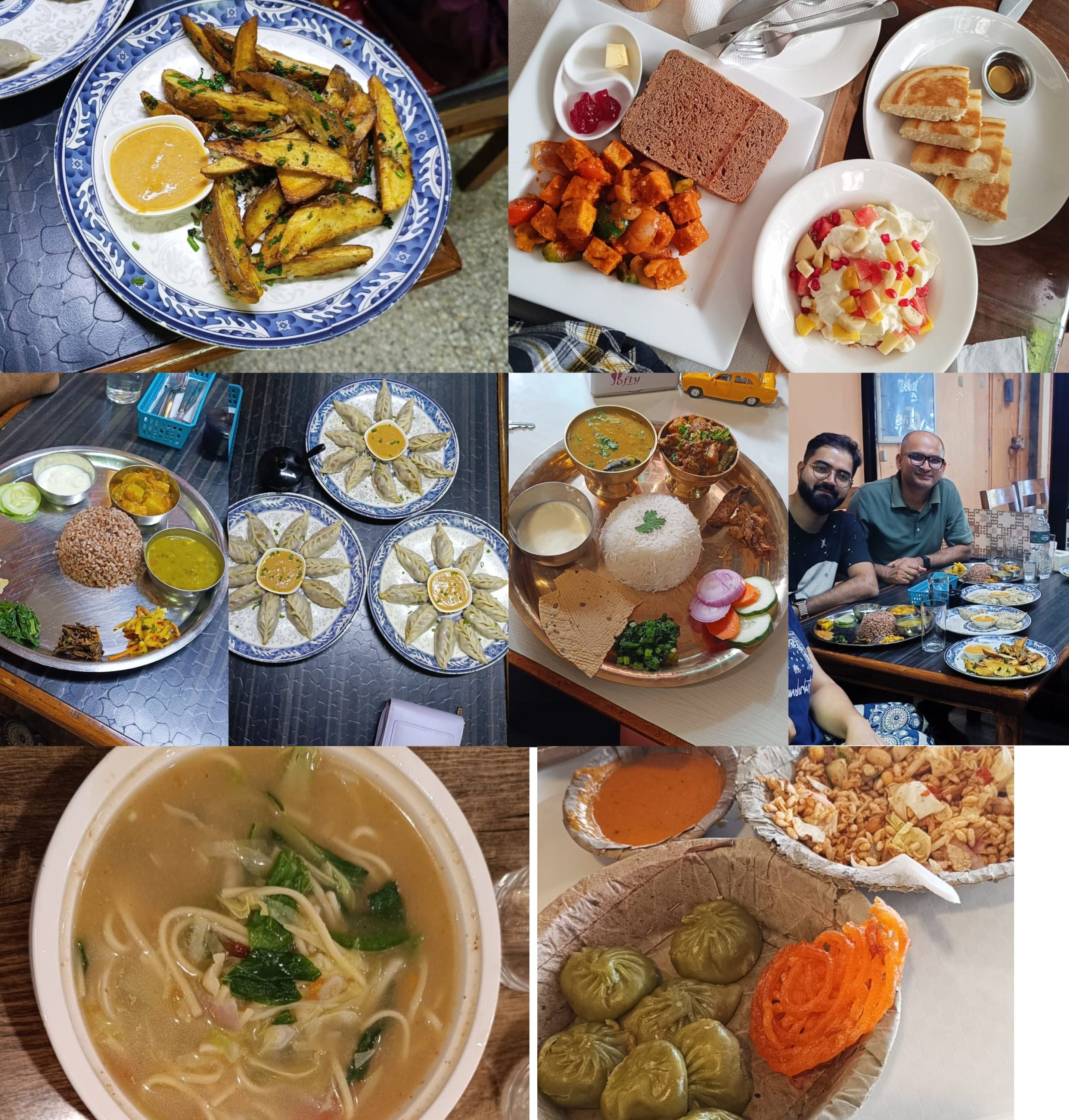
I feel fortunate to have reconnected with my undergrad friend Pramod, who has a truly kind heart. He helped us shop around the Thamel area while keeping everything within an economical budget.
Our next destination was Pokhara, and I can't wait to share the journey and the beauty of this place with you. Stay tuned for all the details about the bus ride and the experiences that await!