
नेपाल 1/5: Kathmandu
Year 2081! Bikram Sambat

In the tales of our childhood and the dharmik series aired on Doordarshan, the revered rishis were often depicted as hailing from the Himalayas. I often wondered how they survived in such cold, with almost no clothing, in those harsh environments. During school, we frequently discussed the heights of iconic peaks like Mt. Everest and Kanchenjunga, but as I explored spiritual literature, I discovered that the Himalayas are often portrayed as a source of inspiration. This realization led me to plan a short trip to Nepal, where one can witness the majestic Himalayan range and connect with sacred religious sites, especially those dedicated to Lord Shiva. Among the most important are the Kedarnath Temple in India and Pashupatinath Temple in Nepal, with Hindu mythology attributing the twelve Jyotirlingas in India to various parts of Lord Shiva's body, designating the Jyotirlinga at Pashupatinath as his head. Now, let's delve into the significant sites in Kathmandu, beginning with the best ways to reach this vibrant city.
Contents
How to Travel from South India to Kathmandu and Where to Stay?
Religious Sites
Durbar Square
How to Travel from South India to Kathmandu and Where to Stay?
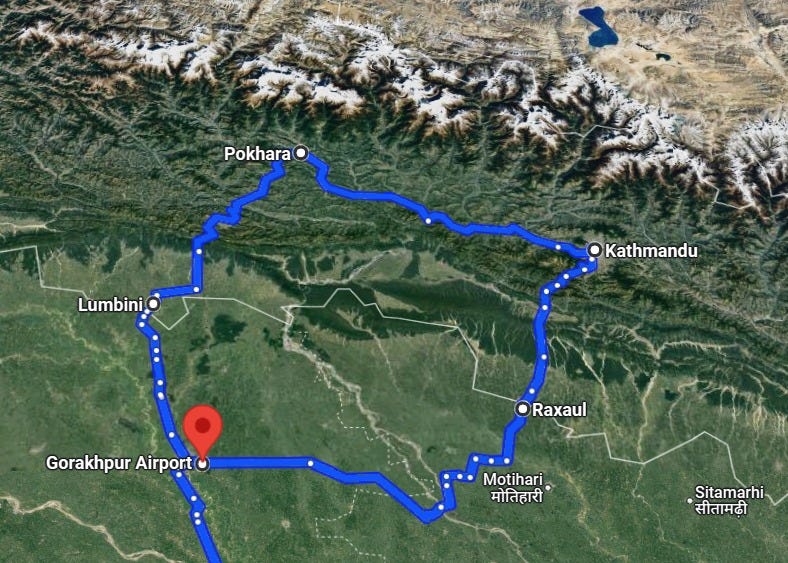
Travelling from southern India, we found the most affordable connecting flight from Chennai or Bangalore to Gorakhpur airport, from where we had two options to reach the Nepal border: Sonauli in Uttar Pradesh or Raxaul in Bihar. Since our destination was Kathmandu, we decided to hire a taxi from Gorakhpur to Raxaul and then catch a bus to Kathmandu. If your plans include visiting Pokhara first, Sonauli would be the better route. The taxi ride took about four hours to Raxaul, where a bus awaited us. We departed around 10 PM, and we were fortunate to have booked a night bus, allowing us to sleep comfortably and arrive in Kathmandu by morning.
Our stay at Hotel Jampa is situated in the lively Thamel district of Kathmandu, which is known for its rich history and diverse dining and shopping options. The staff was very accommodating, even exchanging our currency to NPR at an excellent rate of 1 INR to 1.6 NPR. As a well-known tourist destination, Thamel is an excellent choice for anyone planning a trip to KTM (Nepal).
Religious Sites
Pashupatinath Temple & Boudhanath Stupa
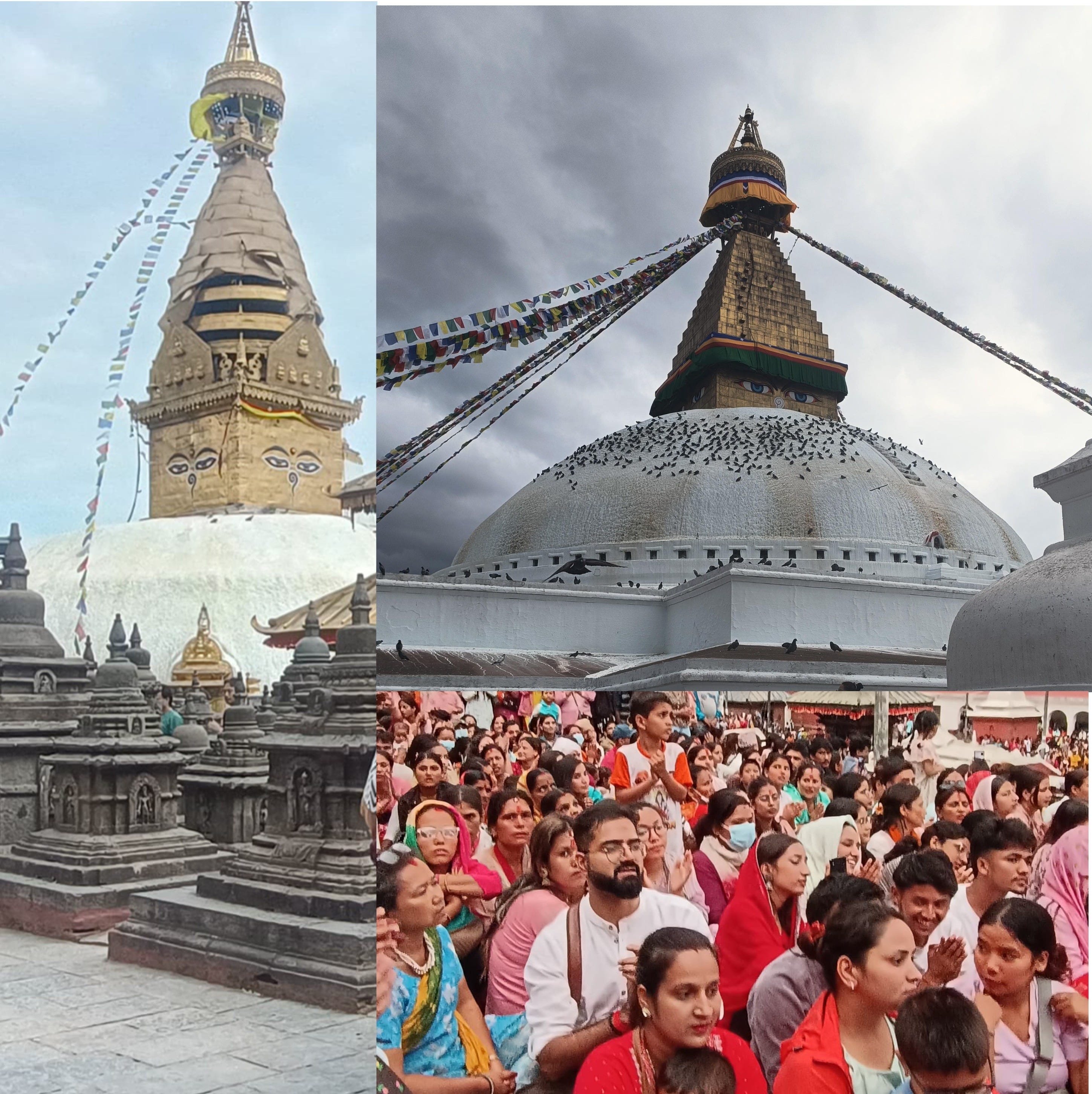
During our stay (Hotel Jampa), we found Boudha and Pashupatinath to be quite close to each other. We decided to visit Boudha in the evening, allowing us to time our visit perfectly for the evening aarti at the Pashupatinath temple. The area around Boudhha is lively, filled with cafes and adorned with prayer wheels lining the walls. You can take a complete stroll around and head up to the first floor for a stunning view, but be cautious with children up there, as there are no safety barriers at the edge. After exploring Boudha, we arranged for a cab (via in -drive app) to take us to Pashupatinath temple, though the drop-off point is a bit of a walk from the temple itself.
As we departed from the drop-off point, we passed numerous shops selling Pooja Samagri items, including Rudraksha beads and ayurvedic remedies. Since it was an off-season, the temple was pleasantly uncrowded, allowing us to enter the premises without delay. Upon entering, we were greeted by the magnificent sight of Lord Pashupati Nath. Thankfully, photography is prohibited inside, which is a relief given how often people feel compelled to capture every moment. The renowned Pashupatinath Temple, dating back to the 5th century, withstood the devastating 7.9 magnitude earthquake that destroyed many other World Heritage sites. Situated alongside the Bagmati River and surrounded by majestic mountains, this location boasts a cremation center at one end and a vibrant aarti ceremony at the other, creating an atmosphere reminiscent of my second home Varanasi. As we completed our darshan and awaited the aarti, a heavy downpour began. Fortunately, we had an umbrella, and the locals were kind enough to help us shield ourselves from the rain. The soothing background devotional music and the overall ambiance kept everyone rooted in the place. The aarti commenced amidst the rain, and the joy on the pundits' faces was very positive. You’ll feel fortunate to experience the recording and images from that magical moment.
Near Pashupatinath, there’s a revered temple (Sakthi Peeth) that’s worth a visit. While you’re there, consider picking up a Rudraksh mala from the nearby shops; they offer genuine pieces at affordable prices.
SwayambhuNath Temple
Swayambhu offers breathtaking panoramic views of the valley, standing as a symbol of faith and unity for centuries, where Hindu temples and deities coexist harmoniously within this Buddhist site. It is said that the splendor of Kathmandu Valley began from this very location. According to legend, it emerged naturally when the valley was formed from a primordial lake over 2,000 years ago. This stupa is the oldest of its kind in Nepal, surrounded by numerous shrines and monasteries. The name Swayambhu translates to "self-existent one." Believed to have been established around 460 A.D. by King Manadeva, it became a significant center for Buddhism by the 13th century. The legend tells that Swayambhu originated from a lotus flower that blossomed in the centre of a lake that once covered the Kathmandu Valley. The stupa complex is adorned with chaityas, statues, and shrines dedicated to both Buddhist and Hindu deities, while the base of the hill is encircled by prayer wheels and divine figures. Devotees can be seen walking around the stupa at all hours.
Bhaleshwor Mahadev in Chandragiri
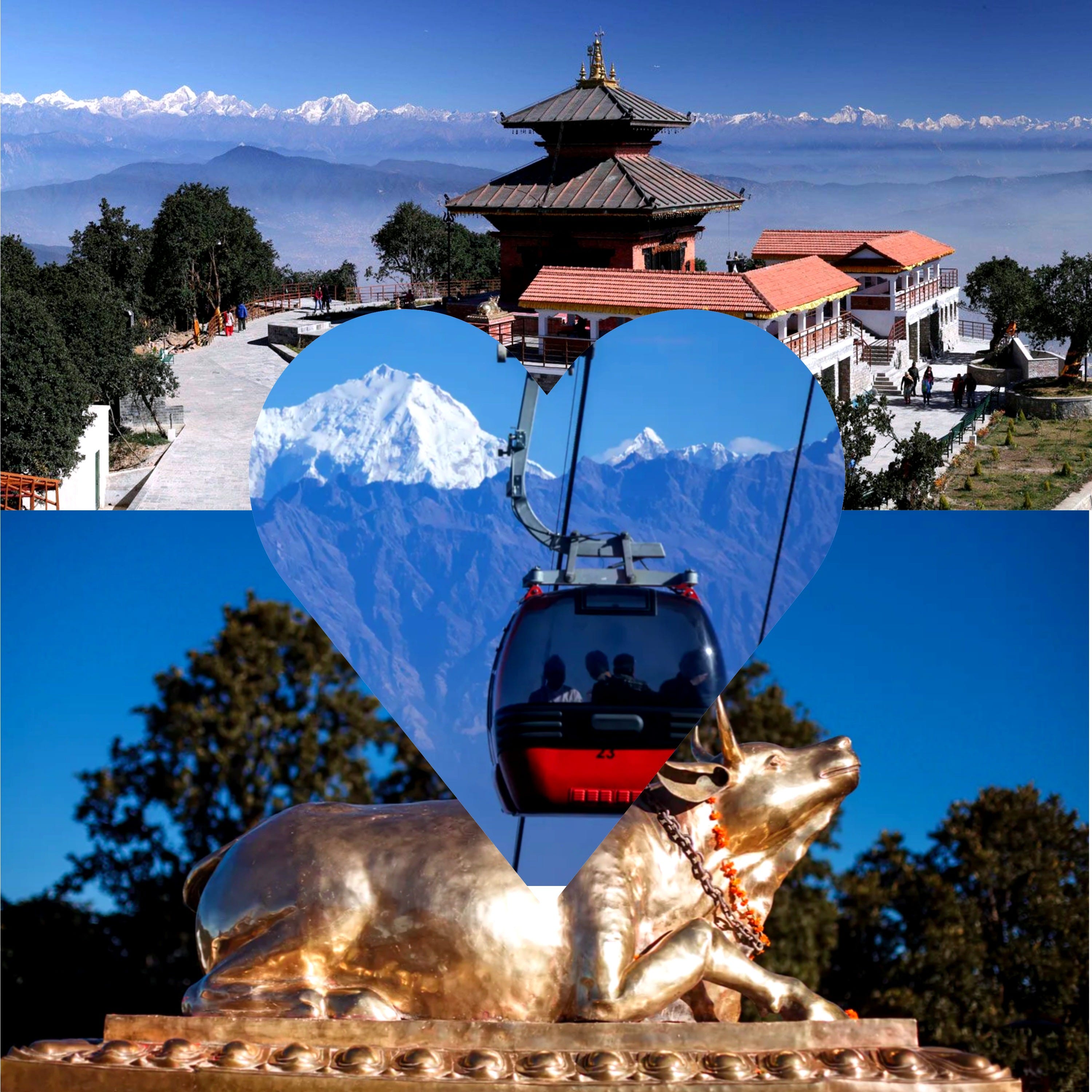
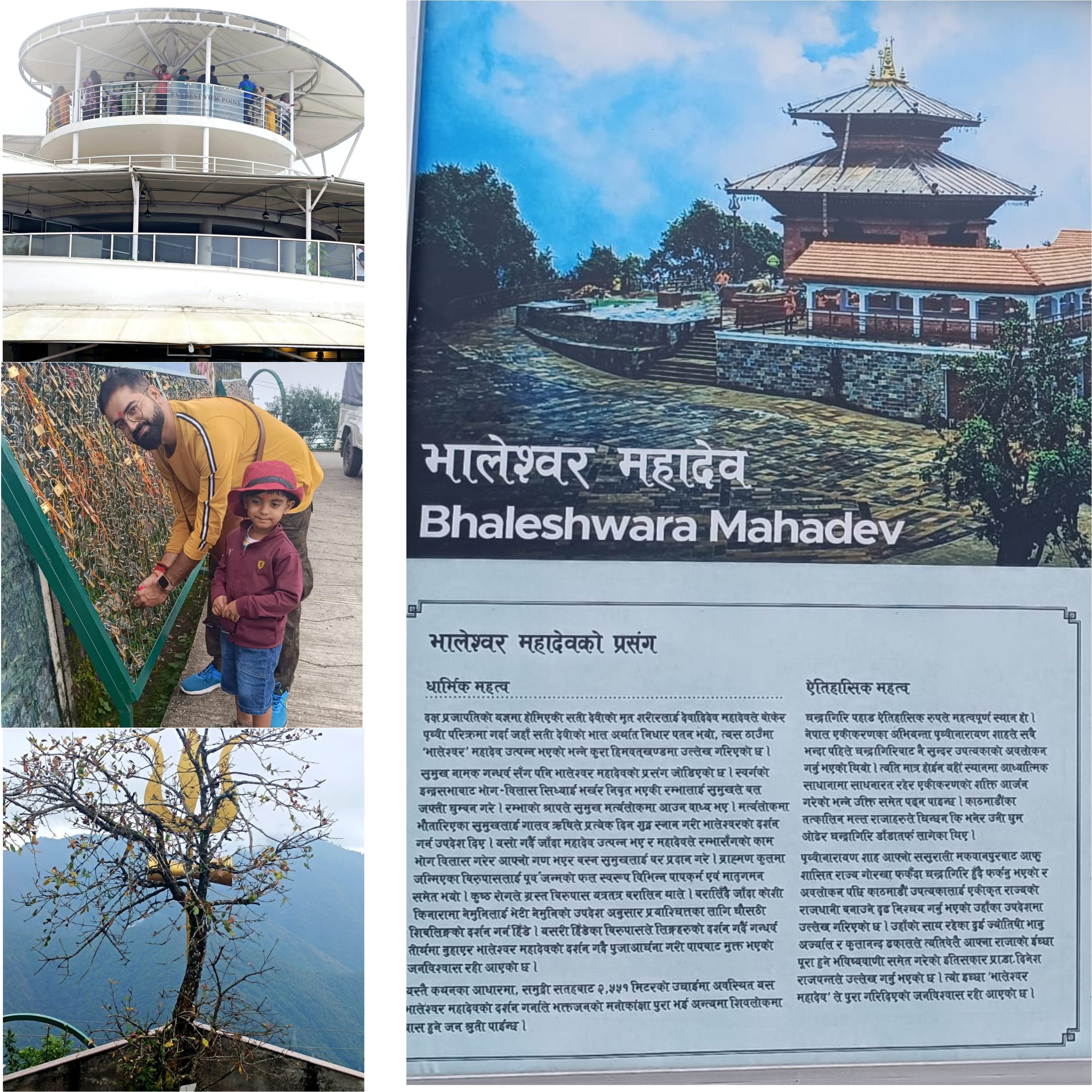
Chandragiri Hill (can be reached via cable car, driving or hiking), located in the peaceful Kathmandu Valley, is the site of the beautiful Bhaleshwor Mahadev Temple. This sacred place is rich in spirituality, history, and natural beauty, drawing in pilgrims, history lovers, and nature fans. This exploration takes a closer look at the unique charm of this special location. The temple has a deep-rooted history of faith and reverence. Legend has it that King Pratap Malla constructed the temple in the 17th century to honour Lord Shiva, known here as Bhaleshwor Mahadev. The temple stands as a lasting symbol of devotion and gratitude to Lord Shiva, the great protector. It holds many ancient inscriptions in the Pashupati, making it a hidden gem for history enthusiasts. These writings provide insight into the rich history and culture of the Kathmandu Valley, sharing the experiences, dreams, and values of earlier generations.
Durbar Square
Durbar Square refers to the historic plazas in front of Nepal's ancient royal palaces. These squares are vibrant with temples, statues, open courtyards, and fountains, showcasing the region's rich cultural heritage. Before Nepal's unification, the area comprised several independent kingdoms, and the Durbar Squares stand as significant reminders of that era. In the Kathmandu Valley, the three most renowned Durbar Squares—Kathmandu, Patan, and Bhaktapur—were once the centres of the Newar kingdoms and are now recognized as UNESCO World Heritage Sites.
1, Kathmandu
2. Patan
3. Bhaktapur
In my next post, I'll explore Durbar Square, where you'll learn about the Living Goddess, a fascinating example of Nepali tradition and craftsmanship. I'll also share insights into Nepali Thakali cuisine and the beautiful village of Nagarkot, located on the rim of the Kathmandu Valley, famous for its stunning views of the Himalayas. Stay tuned!