
Neuro Stillness
S1 E1 - The Neuroscience of Stillness: What Happens When You Meditate?

Dear Friends,
Welcome to the first episode of Neurostillness, where we'll explore how to shift your mindset.
Have you ever felt stuck on a problem, only to have the perfect solution suddenly appear while taking a shower? Or have you ever decided in the heat of the moment and later thought, Why did you do that? They reveal a fundamental truth of our minds: we operate at different frequencies, and there's a constant struggle happening inside our head.
In this post, we'll explore the brain's different operating modes, uncover the key players fighting for control, and explore practical tools to sharpen/calm/train the brain. The goal is to shift into a calm and creative state to make better decisions, unlock new ideas, and take control of life.
Brain Waves
Our brain is constantly producing tiny electrical pulses, and the speed, or frequency, of these pulses determines our mental state. Brain waves are patterns of electrical activity in the brain, typically measured using EEG (electroencephalography).
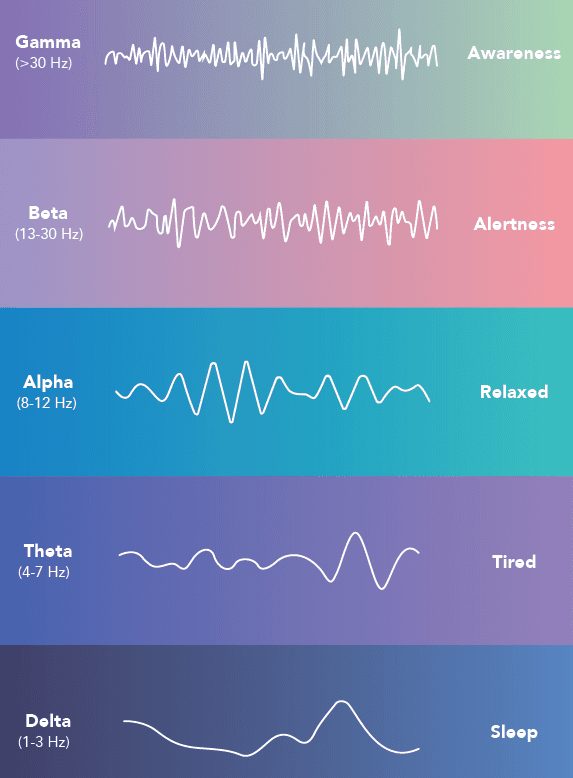
First up is Beta waves, which operate between 13 and 30 Hz, in operation when we are in a meeting, analysing a spreadsheet, or focusing on a deadline. It's your action-oriented, problem-solving mind. It’s essential for getting things done, but if you're stuck in high-beta for too long, it leads to stress, anxiety, and mental burnout.
Next is Alpha waves, from 8 to 12 Hz, which is our state of relaxed alertness. This is the feeling we get when we’re daydreaming, taking a walk in nature, or in a meditation. Your mind is calm but still awake. Alpha is the bridge to your subconscious.
Then, we dive deeper into Theta waves, from 4 to 7 Hz, where the real magic happens. This is the state of deep relaxation and meditation, the zone you're in just before we fall asleep. In Theta, our analytical mind is quiet, and our subconscious is free to make the most unexpected leaps and connections. This is the fertile ground for innovation.
And finally, there's Delta, the slowest waves, associated with deep sleep and restoration. We’ll save that for another day.
So, to recap: Beta is for doing, but Alpha and Theta are for being, creating, and recharging. How to get into Alpha & Theta state, we will discuss next.
CEO vs. Security Guard (Decision Making: A Big Dilemma)
We want more Alpha and Theta. But why is it so hard to get there? Why do we get stuck in that stressed-out Beta state, even when we know we need to calm down?
To understand this, let's imagine your brain isn't one entity, but two key managers in constant negotiation: the prefrontal cortex & Amygdala.
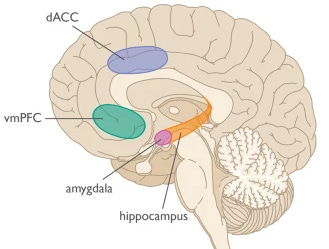
Brain CEO: the Prefrontal Cortex - This is the logical, rational part of our brain, right behind your forehead. It’s in charge of long-term planning, problem-solving and emotional regulation.
But then, there's the head of security: the Amygdala. The Amygdala is an ancient, emotional part of our brain, shaped like a tiny almond. Its only job is to ensure our survival. It’s constantly scanning the world for threats and is primarily fueled by emotion, especially fear.
When we face any situation, both managers propose a response. The CEO suggests a calm, rational plan. The Security Guard suggests an immediate, emotional reaction to keep us safe. So, who gets the final say / the ultimate veto power?
The Amygdala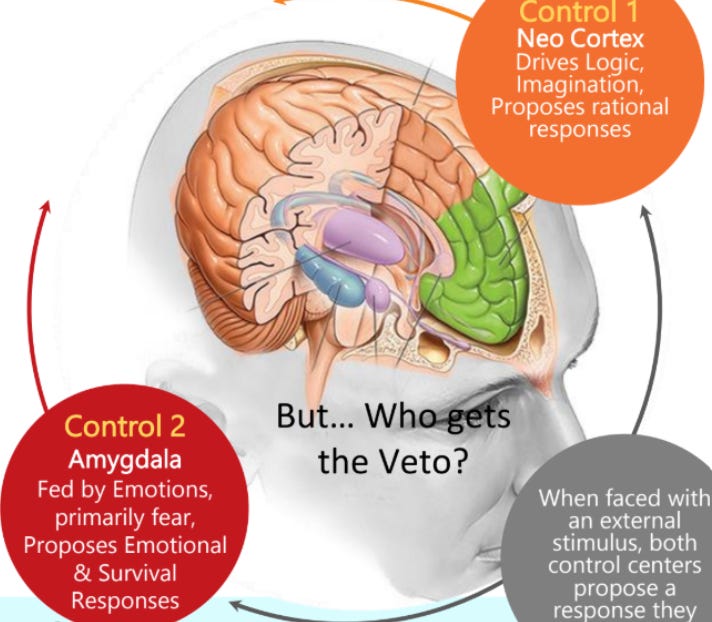
So what should be the aim? How do we strengthen our inner CEO so it isn't constantly getting vetoed? The answer lies in a remarkable property of our brain called neuroplasticity. Let’s discuss this in the next section.
Rewire Your Brain
Neuroplasticity is our brain's ability to physically change and rewire itself based on our experiences and focus. And this is where meditation enters the picture, not as a spiritual belief, but as a neurological workout.
Neuroimaging studies show that regular meditation physically alters these two brain regions. Let's talk about grey matter. Grey matter is the tissue in your brain that contains most of the neuronal cell bodies. It's the thinking and processing part of our brain.
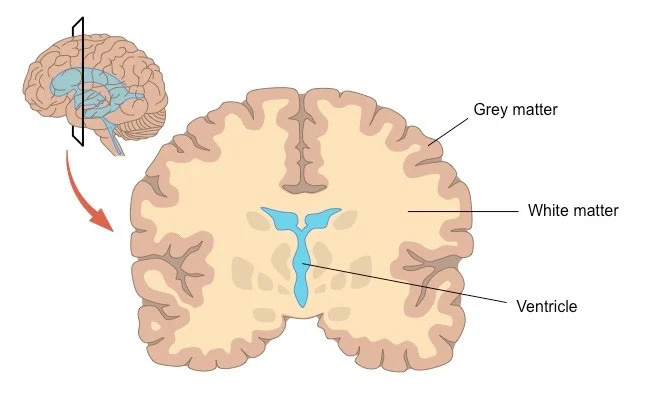
Research shows that consistent meditation practice increases the grey matter density in the Prefrontal Cortex. We are building a bigger, stronger, more robust CEO for our brain. Simultaneously, the practice has the opposite effect on the Amygdala. It reduces the grey matter density in the Amygdala, effectively shrinking and calming our brain’s alarm bell. So with every meditative practice, we are doing two things:
1. Strengthening our rational CEO and
2. Calming our emotional Security Guard
This gives our rational mind more time and space to make a clear, decisive choice before the emotional brain hits the panic button. This is the biological pathway to less stress, better focus, and greater emotional control.
Meditation Practitioners: Albert Einstein, Steve Jobs (co-founder of Apple was an advocate for mindfulness and meditation), Salvador Dali, etc.
A Practical Toolkit
Three simple techniques, from easiest to most impactful, that you can start using today.
The 'Soft Focus' Gaze. This is the fastest way to break out of intense Beta-lock. We spend our days staring intently at screens. To shift, simply look away from your screen - preferably out a window - and let your eyes relax. Don’t focus on any one thing. Let your gaze go soft and your peripheral vision expand. Holding this 'soft focus' for just 60 seconds or even staring at the sky tells our brain to disengage from active analysis and slip effortlessly into a creative, restful Alpha state.
Mindful Breathing. This is the most direct way to calm our nervous system. Let’s try a simple technique called ‘Belly breathing’, also known as diaphragmatic breathing, is a technique that can help calm and relax the body and mind. It involves consciously breathing deeply into your belly, allowing it to expand, rather than just taking shallow breaths into your chest. This technique can help slow down your breathing, increase oxygen intake, and promote a sense of relaxation. We will discuss this topic in detail in the upcoming post.
The Foundational Practice of Meditation. This is the daily workout. Start with just five minutes. A helpful visualisation for this is to imagine your Astral Spine - picture a hollow tube/column, flowing energy running from the base of the spine up through the crown of the head, keeping effortlessly upright and aligned.
Now, close your eyes and bring your attention to the sensation of your breath. Your mind will wander. That's what it does. Your Amygdala will stir things up. When it does, your only job is to gently notice it, without judgment, and guide your focus back to your breath. Every time you do that, you are casting a vote for your Prefrontal Cortex.
Challenge yourself and increase your meditation time to 30 minutes every day. Record your observations, reflect in your journal. You will notice a big change in your behaviour and thoughts. Ending this post with AUM chanting.
If you like this post, please share it with your friends and in your circle. Let’s help each other and build a community of cortex-dominated junta.
Follow the short version here - https://youtube.com/shorts/71Vrihy6p70?feature=share
Reward
There is a reward waiting for you if you like this post. Say a few words about that and reply to 1minuteproductivity@gmail.com
🙏🙏